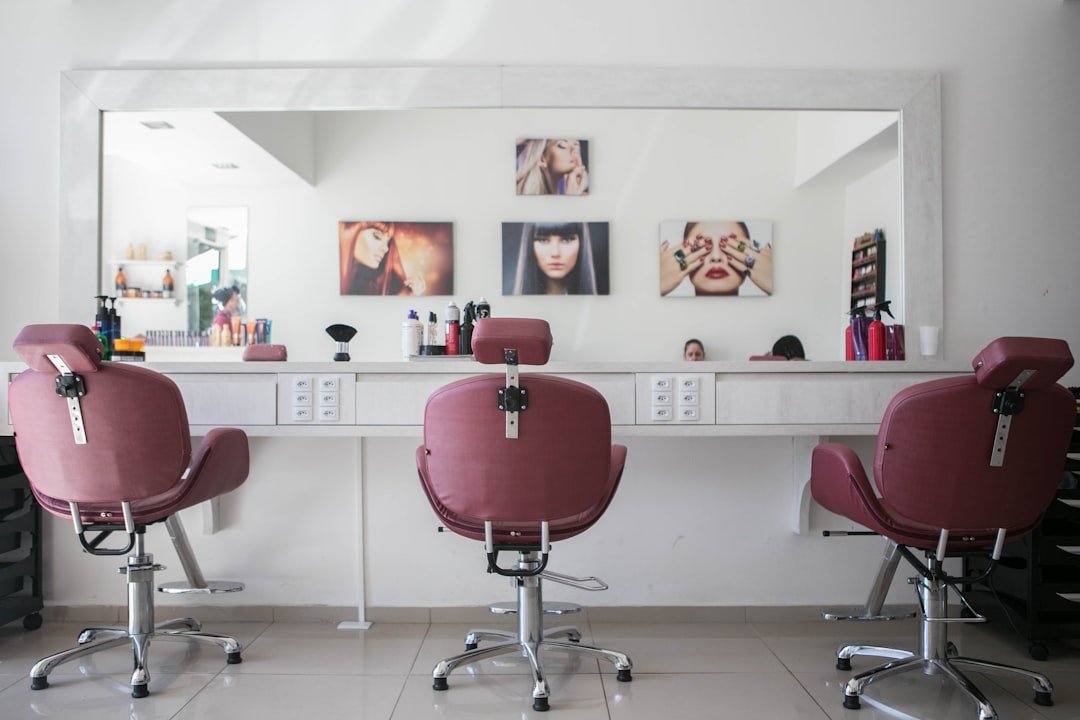
Your salon books 25 appointments a week. At a 15% no-show rate and $65 average ticket, that's $31,187 walking out the door every year. Not because clients don't want the service, but because they forgot. A well-built salon booking app closes that gap. The question most owners face isn't whether to invest in salon booking app development; it's which solution fits their scale and what it will actually cost.
The spa and salon software market hit USD 1.01 billion in 2025 and is projected to reach USD 1.86 billion by 2031, growing at a 10.68% CAGR. That pace reflects something real: clients have shifted. They want to book at midnight, get a text reminder that morning, and pay without handing over a card at the front desk. Salons that can't offer this lose bookings to competitors who can.
This post covers the must-have features any salon booking app needs to earn its keep, realistic cost and timeline ranges, and a framework for deciding when a custom build beats a SaaS subscription.
Why Salon Booking Apps Are Now Table Stakes
According to data compiled by Boulevard drawing on IBISWorld and Federal Reserve economic data, 46 to 50% of salon appointments are now booked outside business hours. That doesn't mean clients stay up late to call anyone. It means they're booking online while watching TV or commuting. A salon that only accepts phone bookings is invisible during those hours.
The same source puts the U.S. hair salon market at $60.6 billion in 2024, with roughly 1.05 million salons operating nationally and average employer revenue near $321,000 per year. That's a thin margin. Bookeo's February 2026 analysis puts average no-show losses at $67,000 per salon per year.
The software market is also fragmented. Mordor Intelligence's salon-software report describes a market with low concentration: 13 or more platforms compete for the same operators, with no single dominant vendor. A custom app built around your specific workflows can be a genuine competitive differentiator when every competitor uses the same off-the-shelf platform.
Must-Have Feature: 24/7 Online Booking and Smart Client Profiles
The foundational feature of any salon booking app is self-booking: a flow where a client selects a service, a stylist, and a time without calling anyone. Over 70% of salon clients now prefer to book appointments online, and the operational benefits compound quickly. Fewer phone interruptions for staff, cleaner scheduling, and a digital record of every booking from day one.
Client profiles are the layer that makes the booking experience feel premium. When a returning client books, the app should surface her usual stylist, the color formula from her last visit, and any noted allergies, all without her having to say a word. Boulevard's 2026 guide to salon appointment apps identifies frictionless self-booking and automated profile building as two of the four non-negotiable features in any serious platform.
Why Removing the Login Requirement Matters
Mandatory account creation is one of the most common reasons clients abandon online booking. Zenoti's May 2026 review of booking platforms identifies client login friction as the leading reason stylists switch software. A well-built online salon appointment booking flow uses email or phone as a soft identifier and surfaces a full profile on return, no password required.
Online first-time bookings retain at roughly 78% for a second visit, versus 39% for walk-ins. If your current second-visit rate sits near 35 to 40%, capturing first-timers through online booking alone is a meaningful revenue shift.
Must-Have Feature: Automated SMS Reminders and No-Show Reduction
No-shows are the most quantifiable problem in salon operations, and automated reminders are the highest-ROI fix available. Etisia's June 2026 no-show statistics report, drawing on three peer-reviewed studies from PubMed and the Cochrane Database, puts hair salon no-show rates at 15% without reminders and 2 to 3% with SMS. That's an 85 to 90% reduction from a feature that requires no ongoing staff effort.
The mechanism is simple. 62% of no-shows happen because clients simply forget, not because they changed their mind. Etisia puts SMS open rates at 98% versus 20% for email, which is why text-first reminders consistently outperform email-only approaches. Beauty and nail salons show the same pattern: a 14% baseline no-show rate drops to 2 to 3% with SMS.
Optimal Reminder Timing
The most effective architecture is a two-touch sequence: one reminder 24 hours before and a second 2 hours before the appointment. Including a one-tap reschedule link in both messages keeps clients from ignoring the reminder entirely. Simple Salon's benchmark data shows combined approaches (reminders plus easy online rebooking) can cut no-shows by up to 80%. The system needs to fire automatically without any staff action.
For a salon running 40 weekly appointments at an $80 average, dropping the no-show rate from 15% to 3% recovers roughly $384 per week, or about $20,000 per year from a single automated feature.
Must-Have Feature: Booking Deposits and Integrated Payments
Reminders solve the forgetting problem. Deposits solve the intentional no-show. Clients who book online are 49% less likely to miss appointments than those who book by phone, and adding a deposit requirement reduces no-shows by 65%. The amount doesn't need to be large. Even 20% of the service cost creates enough commitment to change behavior.
Friction-free collection is the key. The booking and payment steps need to live in the same interface. Platforms like Vagaro, starting at $23.99/month with processing at 2.2%, and Fresha, which charges zero monthly fees with 2.19% plus $0.20 per new client booking, both do this natively. A custom build routes payments through Stripe, Square, or a comparable processor.
POS and Service Checkout
Beyond deposits, the app needs a point-of-sale layer for in-person checkout. An integrated POS that pulls the booked service, allows tip selection, and sends a receipt in under 30 seconds reduces checkout friction and improves the end-of-visit experience. Boulevard and Mangomint both identify embedded POS as a must-have for any scalable salon platform.
Must-Have Feature: Loyalty Programs and Rebooking Automation
Loyalty programs are not optional extras. They are the mechanism through which one-time clients become regulars. 73% of customers prefer salons with loyalty programs, per Zenoti's 2024 Consumer Survey cited by FaveCard. Industry average rebooking sits at 52% for hair salons and 43% for beauty salons, per Kitomba Benchmark Data. Top-performing salons using loyalty programs with automated reminders push that to 80% or above.
Moving from a 43% to an 80% rebooking rate on 300 active clients adds roughly 111 return visits per cycle. At a $65 ticket, that's over $7,000 in incremental revenue per cycle without acquiring a single new client.
What a Rebooking Automation Flow Looks Like
A well-built salon app sends a rebooking prompt 3 to 4 weeks after a client's appointment, timed to when her color or cut typically needs a refresh. The message includes a one-tap link pre-filled with her preferred stylist and service. Visible points accrual (for example, "You have 85 points, worth $8.50 toward your next visit") gives a tangible reason to return rather than try somewhere new. Salons implementing digital loyalty programs see 23% higher customer retention than those without, per FaveCard data.
Must-Have Feature: Staff Scheduling, Multi-Location Management, and Analytics
For a single-location salon with three stylists, scheduling is manageable. For a salon group with five locations and rotating part-time staff, it becomes the operational bottleneck that limits growth. Each stylist should be able to manage their own availability, block time for education days, and see their full week without calling the front desk. The system should sync in real time so online booking always reflects accurate open slots, with no double-bookings.
Multi-location management adds another layer. Fresha's 2026 comparison of salon platforms identifies multi-location support and reporting analytics as the two features most critical for scaling operators. A client who visits your downtown location should be able to book your midtown location through the same app, with her service history intact. Corporate-level reporting should aggregate revenue, no-show rates, and rebooking performance across all locations.
Appointment and CRM functionality captures 36.46% of salon software market revenue, making it the single largest segment. That concentration reflects where operators feel the most pain. An app that handles multi-location scheduling cleanly and surfaces the data pays for itself in management hours alone.
Custom Salon App vs. Off-the-Shelf Software: When to Build
Most single-location salons should not build a custom app yet. Fresha's zero-fee model and Vagaro's $23.99/month tier deliver core features at a cost a custom build can't match early on. The trade-off is tenancy: your data lives on their servers, your branding is constrained by their templates, and your product roadmap is their product roadmap.
The tipping point comes when one or more of these conditions is true:
- Multi-location complexity: You're running 4 or more locations and the platform's reporting or access controls don't map to your org chart.
- Brand differentiation: Your clients interact with your app every 4 to 6 weeks. Generic platform UX undermines the premium experience you've built in-salon.
- Proprietary workflows: You offer blowout memberships, treatment packages, or franchise licensing that standard booking flows can't accommodate.
- Data ownership: You want to own your client data outright and not face export restrictions when you switch vendors.
- Vendor lock-in risk: Boulevard's 2026 guide warns that the wrong platform choice leads to expensive data migrations and staff retraining, a cost that grows with every year on the wrong platform.
No single vendor dominates the salon software space. The platform you build your business on today may be acquired, pivot its pricing, or shut down entirely.
Salon Booking App Development Cost and Timeline
Verifiable cost data specific to salon booking apps is thin. Agency blogs cite figures without sourcing, and vendor pages have obvious incentives. What follows are general app-development benchmarks; treat them as directional ranges. Your actual cost depends on feature scope, team rates, and your cross-platform versus native choice.
Typical Cost Ranges by Complexity
- Basic booking MVP: $15,000 to $40,000. Covers online booking, SMS reminders, basic client profiles, and a payment integration. A good starting point for a single-location salon testing a custom solution.
- Mid-tier booking platform: $40,000 to $90,000. Adds staff scheduling, loyalty and rewards, multi-stylist management, POS, and an analytics dashboard.
- Full-featured custom platform: $90,000 to $150,000 or more. Multi-location management, white-label iOS and Android apps, advanced CRM, franchise billing, and payroll integrations.
Build Timeline
A mid-tier salon booking app typically runs 3 to 6 months from signed scope to a production release on iOS and Android. A tightly scoped MVP can ship in 8 to 12 weeks. Full-featured platforms with multi-location management and custom CRM modules run 6 to 8 months. Cross-platform frameworks like React Native and Flutter cut cost and timeline by sharing the codebase across both platforms.
If your salon group is at the tipping point where off-the-shelf platforms can't support your growth, AppVerra's cross-platform app development team can scope a custom build, including a no-obligation architecture review, before you commit to a budget.
FAQs on Salon Booking App Development
Q: How much does it cost to build a salon booking app?
General benchmarks put a basic MVP at $15,000 to $40,000, a mid-tier platform at $40,000 to $90,000, and a full multi-location custom build at $90,000 to $150,000 or more. The actual figure depends on feature scope, team rates, and cross-platform versus native approach.
Q: How long does salon booking app development take?
A scoped MVP can ship in 8 to 12 weeks. Mid-tier platforms take 3 to 6 months. Full-featured builds with multi-location CRM run 6 to 8 months. Cross-platform frameworks like React Native or Flutter reduce timeline compared to separate native iOS and Android builds.
Q: What features must a salon booking app have?
Non-negotiables: 24/7 self-booking, automated SMS reminders, booking deposits, integrated POS, client profiles with service history, and loyalty or rebooking automation. Multi-location management and analytics matter once you operate more than one site.
Q: Should I build a custom salon app or use Fresha or Vagaro?
Single-location salons should start on an established platform. Fresha's zero-fee model or Vagaro's $23.99/month tier deliver core features cheaply. The case for a custom build grows when you're at 4 or more locations, need brand differentiation, have proprietary workflows, or want full data ownership.
Q: How do booking deposits reduce salon no-shows?
A deposit creates financial commitment at the time of booking. Even 20% of the service cost reduces no-show rates by up to 65%, per Bookeo's February 2026 data. Combined with automated SMS reminders, an 80% reduction in missed appointments is achievable.
Q: What is the ROI of a custom salon booking app?
The primary levers are no-show recovery ($20,000 per year), second-visit retention doubling (78% versus 39% for walk-ins), and rebooking above 80% with loyalty automation. A mid-tier build pays for itself within 18 to 24 months.
Final Thoughts
Salon booking app development is not a technology problem. It's a revenue problem with a technology solution. The no-show losses, the missed after-hours bookings, the clients who don't rebook because no one nudged them: all of these are solvable with features that are well-understood and proven at scale. The real decision is whether your growth trajectory justifies a custom build or whether a mature SaaS platform serves you well enough for now. Either way, the cost of doing nothing keeps compounding. The operators who build the right infrastructure early end up with the data, the client relationships, and the operational leverage.
Sources
- Mordor Intelligence: Spa and Salon Software Market Size and Share Analysis
- Mordor Intelligence: Salon Software Market Size and Growth Forecast 2025 to 2030
- Etisia: No-Show Statistics 2026, Rates by Industry
- Bookeo: How to Reduce Salon No-Shows, Proven Strategies That Actually Work
- Simple Salon: The Real Cost of No-Shows and 3 Proven Ways to Reduce Them
- Fresha: Best Salon Software 2026
- Vagaro: Comparing Appointment Software
- Boulevard: Guide to Choosing a Salon Appointment App in 2026
- Boulevard: Salon Industry Trends 2025, Benchmarks and Average Hair Salon Revenue
- Salon Booking System: 9 Essential Features for 2026
- Zenoti: Best Booking Apps for Beauty Professionals 2026
- FaveCard: Salon Loyalty Program, Boost Rebooking to 80 Percent and Above